
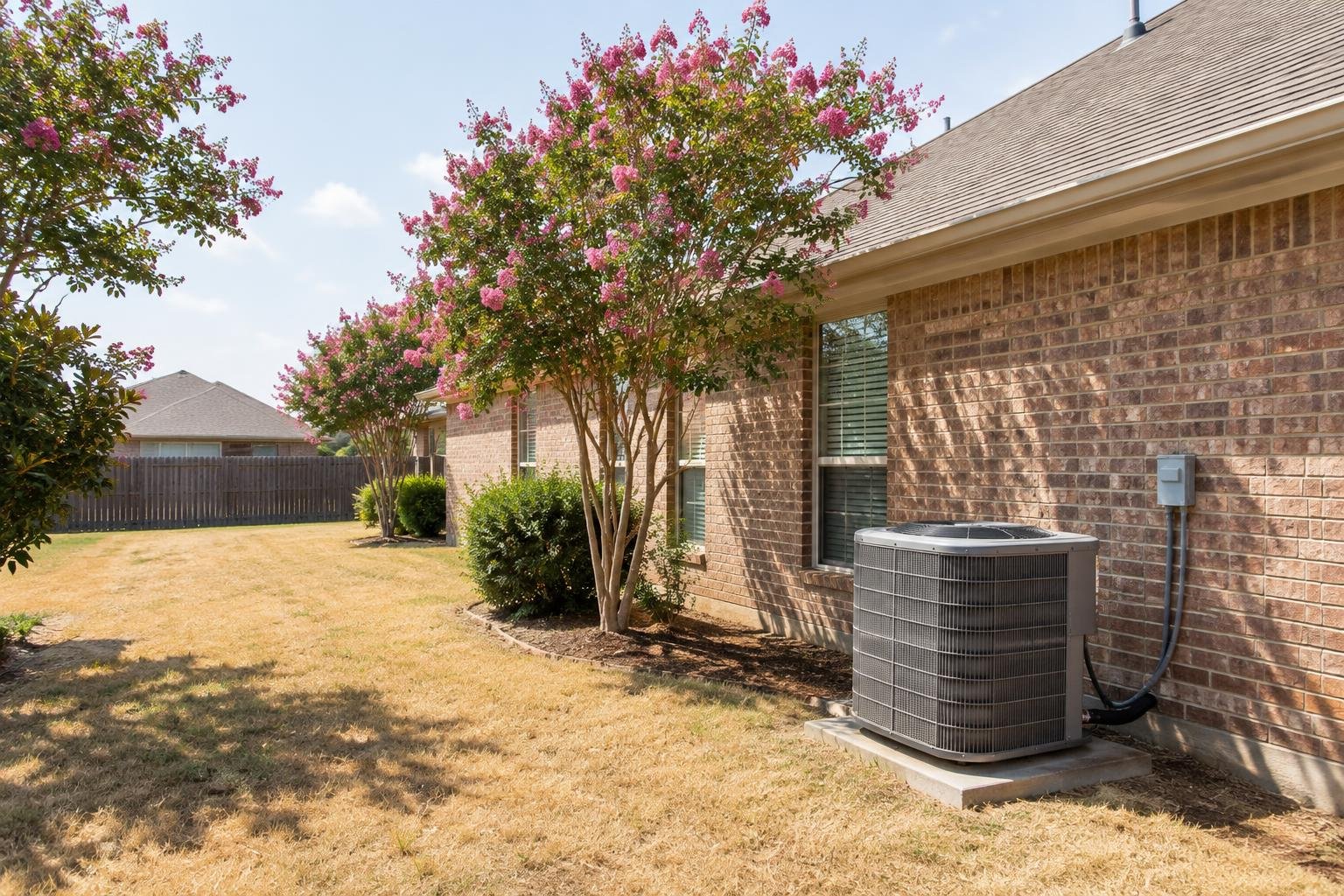
You open the July statement and it's nearly double what you paid in April. Nothing in the house changed. Nobody moved in. So why is my electric bill so high in Texas — and why does it happen every summer like clockwork?
The honest answer is that a high summer bill in Dallas is almost never one problem. It's usually four or five smaller ones stacking on top of each other: a long cooling season, a rate plan that looked cheap on paper, an attic that turns into an oven, and equipment that's quietly working harder than it should. Here are the seven causes we see most often in North Texas homes, and the fix that actually moves the number.
Most Dallas–Fort Worth homeowners buy electricity from a retail provider and pick a plan. Your bill has two big parts: the energy you used, measured in kilowatt-hours (a kilowatt-hour is one hour of running something that draws 1,000 watts — roughly a hair dryer), and the delivery charges from the local wires company that maintains the poles and lines. You can shop the first part. You can't shop the second. That's why cutting usage matters even when you've found a good rate.
In a Dallas summer, air conditioning is the single largest line item in most homes. A stretch of 100-degree afternoons means your system runs for hours at a time instead of cycling on and off. Add three or four of those weeks in a row and the bill climbs even if your habits are identical to spring.
The fix: Stop asking the AC to win a fight it can't win. Raise your setpoint a couple of degrees and hold it steady instead of swinging the thermostat up and down. Run ceiling fans in rooms you're in — they don't cool the air, but moving air makes the same temperature feel cooler, which lets you hold a higher setpoint. Close blinds on west-facing windows before the afternoon sun hits them, not after.
This is the one that catches the most people. Texas plan pricing is advertised at a specific usage level — often 1,000 kilowatt-hours a month. If you use 700 or 2,200, your actual average price can be very different from the number on the ad, because of bill credits that only trigger inside a narrow usage window.
The common traps:
The fix: Pull up your last 12 months of usage, find your real monthly average, and compare plans at your usage level instead of the advertised one. Then check whether you're still inside a contract term. Building a clear home energy plan with residential energy management starts here — knowing what you use, when you use it, and what you're actually being charged for it. Predictable monthly power costs beat riding the market.
On a July afternoon in Dallas, an attic runs far hotter than the outside air. All that heat presses down through the ceiling into your living space. Your AC doesn't just fight the 100 degrees outside — it fights the attic above your head, all evening, long after the sun goes down.
Most North Texas homes built before the last decade have thinner attic insulation than they should, and it's often been disturbed by decades of wiring, plumbing and HVAC work. Add the air leaks — recessed lights, the attic hatch, gaps around ductwork and top plates — and hot attic air flows straight into conditioned rooms.
The fix: Air seal first, then insulate. Sealing the leaks between the attic and living space is the cheaper half of the job and often the one that changes how the house feels. Then bring the insulation depth up to current standards. Upgrading attic insulation for your Dallas home is the step that seals in comfort, steadies your temperature room to room, and lowers the hours your AC has to run. It also fixes the classic complaint: an upstairs that's always five degrees warmer than downstairs.
In most Texas homes, the duct system runs through that superheated attic. Every disconnected joint, torn flex duct or unsealed boot dumps cooled air where nobody lives — and pulls scorching attic air back into the return side.
The fix: Have the duct system inspected and sealed at the connections. If you have rooms that never cool down no matter what the thermostat says, leaky or crushed ducts are a prime suspect. Insulating the ducts themselves matters too, since even a sealed duct loses cooling while it crosses a 130-degree attic.
Air conditioners lose capacity as they age. Coils get dirty, refrigerant charge drifts, capacitors weaken, and the system compensates by running longer. A 15-year-old unit can be doing the same job as it always did while drawing noticeably more power to do it.
Oversizing is the other half of this problem. A unit that's too large for the house cools the air fast, shuts off, and never runs long enough to pull humidity out. Muggy air feels warmer, so you drop the thermostat, and the cycle repeats.
The fix: Keep filters clean and get the system serviced before cooling season, not during it. When it's time to replace, insist on a load calculation for your actual house — square footage, window orientation, insulation level and duct layout — rather than matching whatever size was there before. And do the insulation work first. A tighter house needs a smaller system, and you don't want to pay for capacity you engineered away a month later.
Water heating is usually the second-biggest energy user in a home after heating and cooling. If yours is electric, it's a real share of the bill.
Dallas-area water is hard, meaning it carries a lot of dissolved calcium and magnesium. Those minerals settle out inside a water heater tank and bake onto the heating elements as scale. Scale acts like a blanket between the element and the water, so the heater has to run longer to reach the same temperature — and the tank tends to fail sooner. You'll see the same buildup on showerheads and faucet aerators.
The fix: Flush the tank on a regular schedule and turn the setpoint down to 120°F if it's higher. Longer term, treating the water at the point it enters the house protects every appliance it touches. You can start with a free water report for your Dallas home from H2O Clarity by US Home Comfort to see what's actually in your supply before you spend anything.
Some of the bill has nothing to do with the thermostat. Pool pumps are one of the largest discretionary loads in a Texas home and are often set to run far longer than needed. The second refrigerator in the garage works overtime in a space that hits 110 degrees. Older pool equipment, aquariums, well pumps and a house full of chargers all run 24 hours a day.
The fix: Cut pool pump runtime to what your pool actually needs, and run it in off-peak hours if your plan has them. Move the garage fridge inside or retire it. These are small changes individually, but they run every hour of every month.
Do the cheap, high-leverage work before the expensive work. In that order:
A high Texas electric bill is a load problem and a pricing problem at the same time. Fix the pricing and you stop overpaying for the power you use. Fix the attic, the ducts and the equipment and you simply use less of it. Homes across Dallas, Garland, University Park and the rest of DFW are running the same playbook — and the difference shows up in both the statement and how the house feels in August.
Not sure which step applies to your house? Start with the one that costs nothing: look up your plan's end date and your last 12 months of usage. Then take on the attic.