
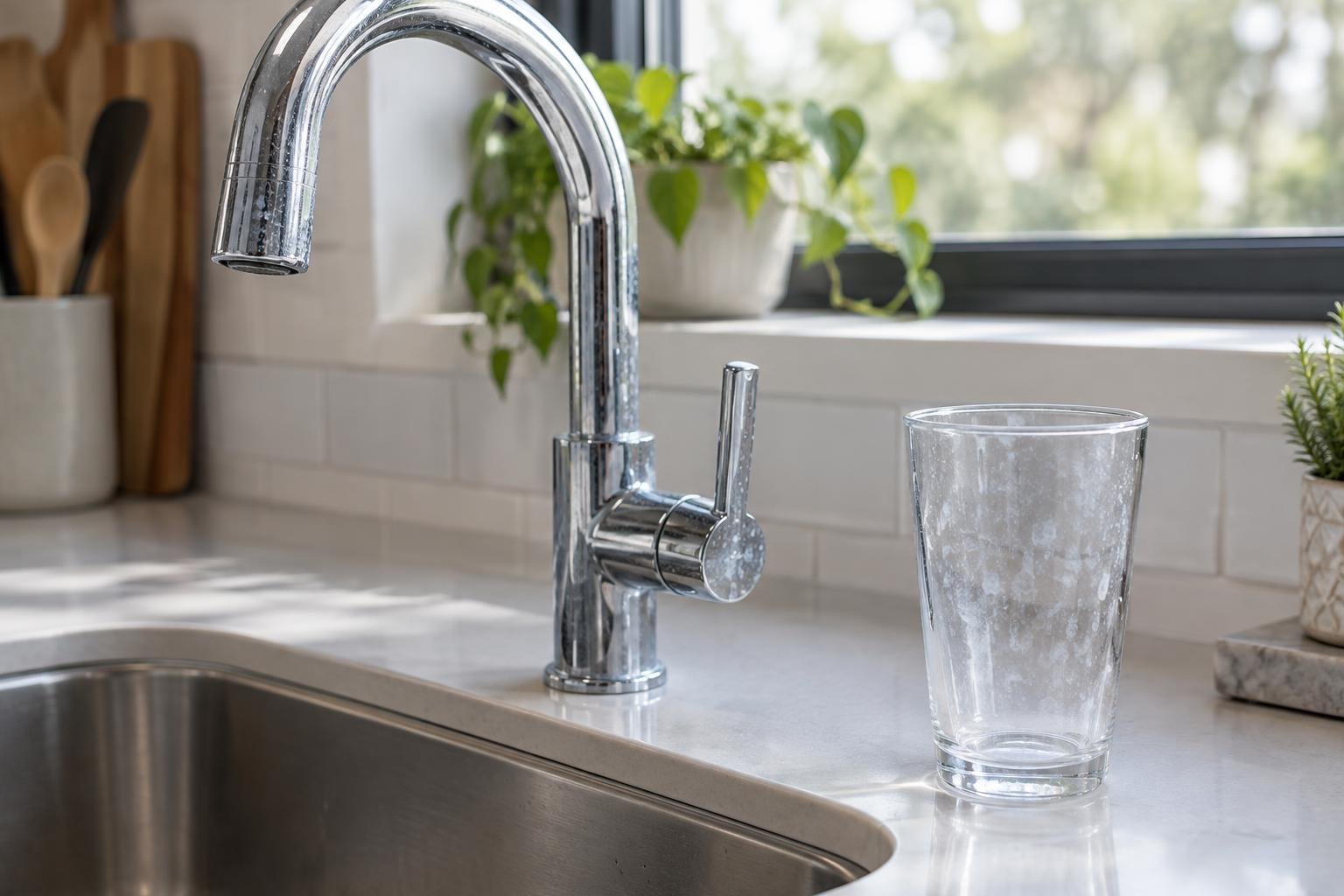
Yes. Dallas has hard water. So does almost every city around it — Plano, Frisco, Garland, Richardson, Irving, Arlington, Highland Park and University Park included. If you have been wondering "does Dallas have hard water," the spots on your glassware already answered it. This post explains what that actually means, how hardness is measured, why your number is different from your neighbor's two suburbs over, and the five things homeowners notice first.
Hard water is water carrying dissolved minerals — mostly calcium and magnesium. It picks them up from limestone and other rock as it moves through and over the ground. North and Central Texas sit on a lot of limestone. Our drinking water comes from surface reservoirs that collect runoff across that landscape. The minerals come along for the ride.
Those minerals are not a health hazard. Hard water is safe to drink. It is treated, tested and regulated. The problem is mechanical, not medical: when hard water is heated or left to evaporate, the minerals come out of solution and stick to whatever they touch. That crusty white buildup is scale. It coats the inside of your water heater, narrows your pipes, clogs showerheads, fogs your shower door and shortens the life of every appliance that takes a water line.
Water hardness is reported two ways:
The standard classification scale used across the water industry looks like this:
Dallas-area tap water generally lands in the moderately hard to hard bands — well above the point where scale starts forming on fixtures and inside water heaters. That is why the symptoms below are so common here and why "does Texas have hard water" is a question so many people who move here end up typing.
Every public water system in Texas publishes an annual water quality report — sometimes called a Consumer Confidence Report. Your provider posts it online and it lists hardness along with everything else they test for. Search your city or district name plus "water quality report" and you will find it.
That report tells you what left the treatment plant. It does not tell you what is coming out of the tap in your kitchen, which is a different question if your home has older galvanized or copper plumbing, a water heater with years of sediment in it, or a private well. For that, you need a test at the house. We cover the gap between the two in detail in How Hard Is Dallas Water, Really?
There is no single "Dallas water hardness" number, because there is no single source. Dallas Water Utilities draws from a network of reservoirs in the Trinity and Sabine basins. The North Texas Municipal Water District, which supplies much of Collin and Rockwall County, draws from its own lakes. Fort Worth, Irving, Arlington and dozens of smaller systems each have their own mix of sources and treatment processes. Several suburbs buy wholesale water from a larger district and blend it with their own supply.
That means three things for you:
The honest answer to "what is my hardness" is: test it. Averages are a starting point, not a specification.
Clean dishes come out of the dishwasher with chalky white spots. Chrome faucets haze over a day after you wipe them. Shower doors develop a cloudy film that regular cleaner will not touch. That is mineral residue left behind as water evaporates — the most common first clue, and the one people learn to live with long before they connect it to hard water.
Hard water minerals react with soap instead of letting it foam. You use more shampoo, more detergent, more dish soap, and you still get less lather. Then the reaction product — soap scum — bonds to tubs, tile grout and shower walls. If your bathroom seems to need scrubbing again two days after you scrubbed it, hardness is a likely reason.
People who move to Dallas from a soft-water region usually notice this within a week. Skin feels tight after a shower. Hair feels coated, dull or straw-like. It is the same soap-scum chemistry, just happening on you instead of on the tile. Colored hair tends to fade faster too.
Heat drives minerals out of solution fastest, so your water heater takes the hardest hit. Scale builds on the burner surface or heating elements and settles as sediment in the tank. You hear popping or rumbling during a heating cycle. Showers run out of hot water sooner. The unit works harder to deliver the same result — and it does not last as long as it should. Scale inside a tankless heater is worse, because the passages are narrow to begin with.
Showerheads spray sideways or drip after you shut them off. Aerators clog. Pressure at the kitchen sink drops off over the years. Mineral deposits are slowly narrowing the openings. Fixtures are the visible version; the same process happens in supply lines, valves, dishwashers, washing machines and ice makers where you cannot see it.
None of these symptoms will flood your house. They cost you in slow, quiet ways instead: appliances replaced years early, more detergent and cleaning product, more time scrubbing, a water heater burning more energy than it needs to, and plumbing service calls you would rather not make. Scale also makes every other comfort investment in your home work harder — including the water-heating side of your monthly utility bill.
Here is the distinction that trips up most homeowners shopping for Dallas water conditioning:
Plenty of Dallas homes need both, and plenty need only one. It depends on your test results, your plumbing and what is bothering you most. We walk through that decision side by side in Whole House Water Filter vs Water Softener: Which One Does Your Dallas Home Need?
Do not buy equipment based on a city average or a door-to-door sales pitch. Start with what is coming out of your taps.
H2O Clarity by US Home Comfort gives Dallas homeowners a free water report — your hardness level, what else is in your supply, and a plain-English read on whether softening, whole house water filtration or both makes sense for your house. No obligation, no pressure. If the answer is that your water is fine as it is, we will tell you that.
Request your free water report on our Dallas water filtration page, or get in touch with our team if you would rather just ask a question first. Cleaner water at every tap starts with knowing what you actually have.